

The Consistency of God-Part 2
- Titus1man
- Jun 6, 2021
- 5 min read
Updated: Dec 27, 2025
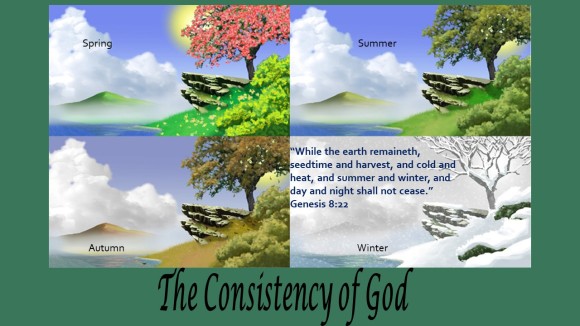
The Saviour in His miracles revealed the power that is continually at work in man’s behalf, to sustain and to heal him. Through the agencies of nature, God is working, day by day, hour by hour, moment by moment, to keep us alive, to build up and restore us. When any part of the body sustains injury, a healing process is at once begun; nature’s agencies are set at work to restore soundness. But the power working through these agencies is the power of God. All life-giving power is from Him. When one recovers from disease, it is God who restores him. – {Ministry of Healing (MH) 112.1}
In his book, “The Place of the Bible in Education” author AT Jones captures with such clarity the thought of God as is seen in the preceding paragraphs.
Here it may be queried: As God made man, and of course all intelligent creatures, free to choose, and therefore free to choose the way of sin if they should so choose, did He not then have to provide against this possible choice, before man was made? — The answer is, Certainly He did. And since He made and must make all creatures of moral sense also thus free to choose, He had to make provision for the possibility of the entrance of sin, even before ever there was a single intelligent creature created. And He did so. This provision is but a part of that eternal purpose which He purposed in Christ Jesus, our Lord. {1903 ATJ, PBE 130.1}
Let us, in thought, go back to when there was no created person or thing: back to the eternal counsels of the Godhead. The existence of God is not a self-satisfied existence. His love is not self-love. His joy is not fulfilled in wrapping Himself within Himself, and so sitting solitary and self-centered. His love is satisfied only in flowing out to those who will receive and enjoy it to the full. His joy is fulfilled only in carrying to an infinite universe, full of blessed intelligences, the very fullness of joy. {1903 ATJ, PBE 130.2}
Standing, then, in thought, with God before there was a single intelligent creature, He desires that the universe shall be full of joyful intelligences enjoying His love to the full. In order that this shall be, they must all choose to enjoy His love and His joy. In order to choose this, they must be free to choose it. And in order to be free to choose it, they must be free not to choose it: free to choose not to serve Him, to choose not to enjoy His love and joy. They must be free to choose Him or themselves, life or death. This involves the possibility that some will choose not His way, but their own way apart from Him; and so involves the possibility of the entrance of selfishness, the entrance of sin, which is directly the opposite of all that is Himself. Shall He then refuse to create intelligences at all because if He creates, it must be with the possibility that sin may enter? If this shall be the decision, the result could only be that He must eternally remain self-centered and solitary. But that itself is also the opposite of all that is Himself. Therefore to decide thus would be to decide that He would cease to be God. But He cannot cease to be God; “He cannot deny Himself;” therefore He must create even to the infinite limit. {1903 ATJ, PBE 131.1}
And He did create. He created intelligences. He created them free to choose: free to choose His way, or to choose the opposite: and therefore free to sin if they choose. And at the same time, in His infinite love and eternal righteousness, He purposed to give Himself in sacrifice to redeem all who would sin; and give to them a second freedom to choose Him or themselves, life or death. And those who, against all this, would the second time choose death, let them have what they have persistently chosen. And those who would choose life — the universe full of them — let them enjoy to the full that which they have chosen: even eternal life, the fullness of perfect love and of bliss forevermore. {1903 ATJ, PBE 131.2}
This is God, the living God, the God of love, the God and Father of our Lord Jesus Christ, who is fully able to do whatsoever He will in heaven and earth, and yet leave all His creatures free. This is He who from the days of eternity “worketh all things after the counsel of His own will.” And this is “the mystery of His will . . . . which He hath purposed in Himself; that in the dispensation of the fullness of times He might gather together in one all things in Christ, both which are in heaven, and which are on earth; even in Him.” This is “the eternal purpose which He purposed in Christ Jesus our Lord.” in whom God reconciles the world unto Himself. {1903 ATJ, PBE 132.1}
Yet even in this supreme and divine act of reconciliation, God does not seek to bind man to Himself in an absolute and irresponsible bondage, as Satan bound him when his way was chosen. God ever respects the freedom of choice of which He is the Author. He will not even now compel man to take the way of righteousness, nor compel him to keep that way after he has chosen it. When that creative word was spoken, “I will put enmity” between mankind and the enemy, He made man free again, to choose for himself whom he will serve. By that word man’s will is freed, and forever abides free, to choose to serve whom he will, to choose deliverance from the bondage of sin or to remain in it. {1903 ATJ, PBE 132.2}
The fact that God knew the evil that men would do, before the foundation of the world, does not make him responsible for it in any way shape or form. We would never hold a man responsible for an act that he sees by means of a telescope what another man is doing ten miles in the distant. God has from the beginning set before people warnings against sin, and has provided them with all the necessary means for avoiding it; but he cannot interfere with man’s right and freedom of choice without depriving him of his manhood and making him the same as a stick.
To make man free and turn around and punish him for exercising the very right you gave him would not be just. That idea is contrary to every principle of God’s character. In Christ, ample provision is made to recover from all our bad choices for His compassion fail not. Great is His faithfulness.


Comments